
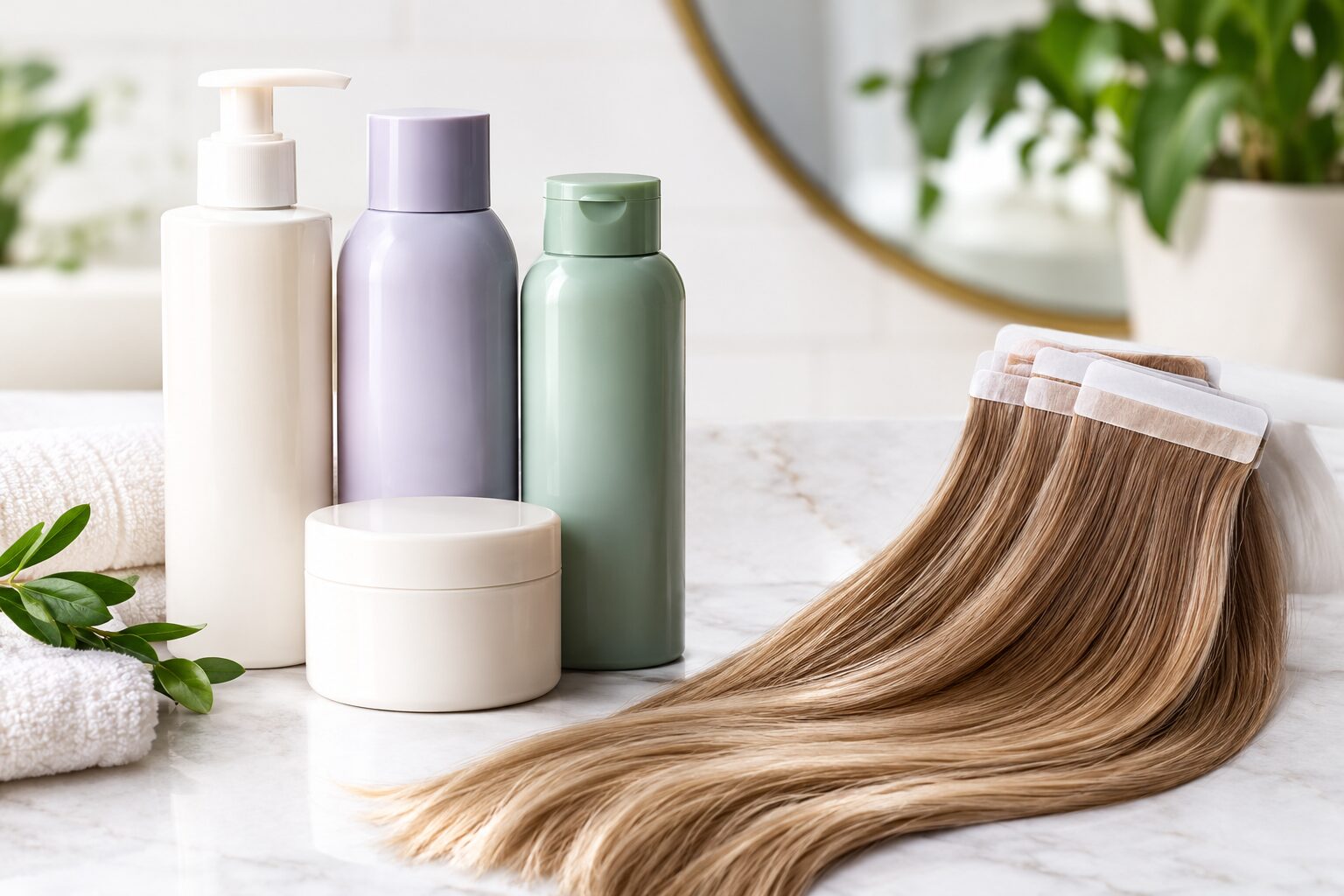
Choosing the best shampoo for tape-in extensions comes down to one thing: protecting the adhesive bond while keeping your hair clean and healthy.
Tape-in extensions attach using medical-grade tape strips placed directly against your natural hair near the root, and the wrong shampoo can weaken that bond faster than expected. Oil-heavy formulas, harsh sulfates, and heavy conditioners often cause extensions to slip sooner than they should.
This guide breaks down which ingredients to look for, which ones to avoid, and how your washing routine affects how long tape-ins actually last.
Whether you may wear tape-ins or are comparing extension methods before booking a consultation, understanding product safety is one of the easiest ways to protect your investment.
Why Tape-In Extensions Need Specific Hair Care Products
A shampoo is ideal to use with tape-ins if it is sulfate-free, oil-free around the root, and designed to gently cleanse without stripping your hair of its natural oils or damaging the adhesive.
Tape-in extensions, like the Miami Metro tape-in hair we apply at Extension King, attach to your natural hair with adhesive strips, not clips or rings, so any product that loosens or dissolves adhesive can shorten your extensions’ lifespan. Products designed for natural hair are not necessarily safe to use with tape-bonded hair.
Oils, silicones, and certain conditioning agents coat the hair shaft, but that same coating can seep into the tape and cause it to lose grip. This is one reason product choice matters just as much as the application technique itself.
What Makes a Shampoo Safe for Tape-Ins
A shampoo is suitable for your tape-ins if it is sulfate-free, oil-free around your roots, and designed to gently clean your hair without stripping it of its natural oils or damaging the bonds in the tape-in adhesive.
Sulfate-free shampoos are perfect for cleaning your scalp. They effectively remove oil and buildup without stripping your hair of its natural moisture and leaving it feeling dry and brittle after multiple washes.
Instead, look for shampoos specifically recommended for extensions, keratin-treated hair, or color-treated hair, since these products tend to avoid the heavy oils or cleansing agents that cause early slippage.
Ingredients to Avoid in a Tape-In Extension Shampoo
Certain ingredients consistently show up as the cause of loosened tape bonds, and avoiding them is the simplest way to extend wear time.
- Sulfates, including sodium lauryl sulfate, which strip natural oils and can dry out both the hair and the tape adhesive
- Heavy oils such as concentrated coconut or argan oil applied near the root, which soften tape from the inside out
- Alcohol-based formulas, which dry the hair shaft unevenly and weaken the bond area over time
- Silicone-heavy conditioners, which build up along the tape line and reduce grip
Best Shampoo Types for Tape-In Extensions
The best shampoo for tape-in extensions should cleanse the scalp and natural hair without leaving heavy buildup around the roots or weakening the adhesive tabs. Look for a lightweight, sulfate-free shampoo that is gentle enough for regular washing while still removing excess oil, sweat, and product residue.
A clarifying shampoo can be useful occasionally when buildup is noticeable, but it may be too drying for frequent use. For regular washing, a mild, color-safe shampoo formulated for hair extensions is usually a better choice.
When choosing between shampoos, pay attention to the formula and the label. Avoid heavy, oil-rich formulas that can leave residue near the tape bonds. No matter which shampoo you choose, apply it mainly to the scalp and natural hair, letting the lather cleanse the lengths without aggressively rubbing the tape areas.
How to Wash Tape-In Extensions Without Loosening the Bonds
Your washing technique matters as much as your product type. But which hair-washing technique is right?
Tilt your head back instead of forward, apply shampoo only to the scalp, and allow the suds to slide down the hair instead of rubbing your roots.
Do not plait wet hair on top of your head or twist it in a towel because these movements can put pressure on the tape bonds. Rinse thoroughly and pat dry with a microfiber towel to reduce friction around the extension line.
Conditioners and Styling Products That Keep Bonds Secure
Apply conditioner from mid-length to ends, never at the root or directly on the tape. Applying conditioner too close to the scalp is one of the fastest ways to soften the bond prematurely.
Lightweight leave-in treatments and heat protectants are generally safe when kept away from the tape area. Avoid heavy serums, deep oils, and root-focused styling creams, since they tend to migrate toward the scalp throughout the day.
Choosing the Right Extension Method for Your Lifestyle
Choosing the right shampoo and skipping the wrong ingredients can meaningfully extend how long extensions hold between salon visits. If you are still deciding between extension methods or want guidance tailored to your hair type, scheduling a free VIP consultation is the easiest way to get a personalized product and care routine built around the best shampoo for tape-in extensions and your specific hair goals.
Frequently Asked Questions
What is the best shampoo for tape-in extensions?
The best shampoo for tape-in extensions is a sulfate-free, oil-free formula that cleanses the scalp gently without coating the hair near the root. Extension-specific or color-safe shampoo lines usually meet this standard.
Can I use regular shampoo on tape-in extensions?
You can use regular shampoo if it is sulfate-free and free of heavy oils, but many everyday formulas contain ingredients that soften adhesive over time. Checking the label before switching products helps avoid early slippage.
How often should tape-in extensions be washed?
Most tape-in extensions do best with washing every two to three days rather than daily. Overwashing strips natural oils faster and can loosen the tape bond sooner than expected.
What styling products you should avoid with tape-ins?
Avoid heavy serums, root-focused oils, and silicone-rich styling creams near the tape line. Lightweight, root-free formulas are generally safer for maintaining a secure bond.
