
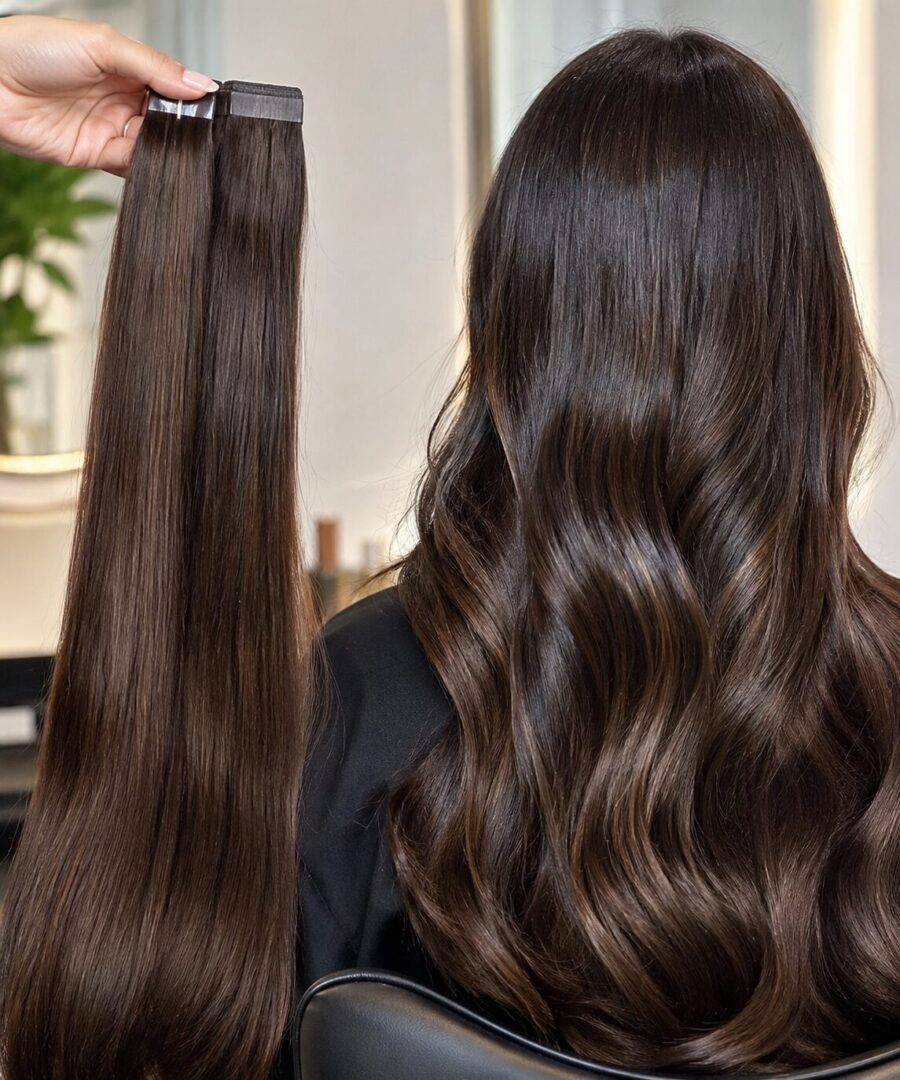
How to move up tape-in extensions depends on how the extensions are applied and how much your natural hair has grown. As your hair grows, the tape tabs move farther from the scalp, so a professional move-up is often needed to keep the extensions secure, comfortable, and properly positioned.
A move-up involves removing the tape-ins, cleaning away old adhesive, and reapplying the extensions closer to the scalp. While some people consider doing this at home, DIY repositioning can cause uneven placement, weak adhesion, tangling, or unnecessary stress on natural hair.
Below, we compare at-home and salon move-ups and explain what each process involves.
What Does “Moving Up” a Tape-In Actually Mean?
Moving up a tape-in means removing the existing adhesive tabs and reattaching the same wefts closer to the root in the section of hair that has grown out since your last appointment. It is a maintenance step, not a full reinstall, and it typically happens every six to eight weeks depending on how fast your hair grows.
You can reuse the tape for several cycles if you remove it correctly. This is exactly where the difference between home and salon methods starts to matter.
Can You Move Up Tape-In Extensions at Home?
Technically, yes. Adhesive remover, a rat-tail comb, and patience are the basic tools people use to loosen the old tape and shift the weft upward. How to move up tape-in extensions at home usually involves softening the bond, sliding the tape free, cleaning residue off the strands, and reapplying it higher on the section.
In practice, this is harder than it sounds, especially on the back sections of your head where visibility is limited.
What Are the Risks of Repositioning Tape-Ins Yourself?
The biggest risk is uneven pressure. If the tape doesn’t bond flat and evenly, it can pull on the natural hair strands trapped underneath, leading to tension, breakage, or a lopsided part. Leftover adhesive residue is another common problem, since it can make the hair feel waxy or cause the new tab to slip within days.
Working blind on the crown or nape also makes it easy to grab too much or too little natural hair in each section, which changes how the extensions lie and how comfortable they feel day to day.
How Does Salon Reapplication Work?
A trained stylist uses a controlled adhesive remover, sections the hair precisely, and checks strand health before reattaching anything. This is a safer way to move up tape-in extensions because the stylist can see every angle and adjust placement to your natural growth pattern.
At Extension King Hair Salon & Shop, every reapplication starts with a look at how your hair has grown since your last visit, so the new placement supports your natural hair rather than straining it. The same growth check comes first at every move-up for clients wearing our tape-in extensions in Miami Metro.
Home vs. Salon: Which Option Protects Your Natural Hair?
Precision
At-home move-ups can be difficult to position accurately, particularly in the back sections of the head. A trained stylist has better visibility and can create clean, even sections for more precise placement.
Risk of Tension or Breakage
DIY repositioning carries a higher risk of placing extensions incorrectly or creating excess tension on the natural hair. Professional application can help reduce unnecessary pulling and distribute the extensions more evenly.
Adhesive Residue Removal
Completely removing old adhesive is an important part of the move-up process. At home, residue may remain, while a stylist can use the right technique and products to thoroughly clean the hair before reapplication.
Reusability of Tape
Tape-in extensions can often be reused when they are handled and maintained properly. Professional removal and reapplication can help preserve the extensions and minimize damage to the wefts.
Overall Result
An at-home move-up may produce uneven placement or an inconsistent finish. A salon move-up provides greater control over sectioning, placement, and attachment, helping the extensions look more secure and natural.
How Often Should Tape-Ins Be Moved Up?
Most wearers need a move-up appointment every six to eight weeks. Hair texture, growth rate, and even Miami’s humidity can shorten or stretch that window slightly. Waiting too long between appointments strains the tabs and makes the eventual reapplication harder, whether you do it yourself or book a professional.
Final Thoughts
Knowing how to move up tape-in extensions is less about the tools involved and more about precision and control, two things that are hard to guarantee at home. If your tape-ins are due for a move-up, schedule a free VIP consultation and let a trained stylist reapply them safely.
Ready for a Professional Tape-In Move-Up?
A proper move-up takes precision, careful removal, and correct repositioning to help protect your natural hair and keep your extensions looking their best. Extension King uses careful application techniques designed to protect your natural hair throughout the process.
If your tape-ins have grown out or need to be repositioned, book a professional appointment with Extension King to have them removed and reapplied correctly.
Not sure which extension method is right for you? Their team can also help you compare tape-ins with other bonding methods based on your hair and maintenance needs.
Frequently Asked Questions
Is it safe to move up tape-in extensions myself?
You can do it, but without training, the risk of tension, breakage, and leftover adhesive is higher. A stylist can see and control the process in ways that are difficult to replicate at home.
How do I know my tape-ins have grown out?
Visible gaps between the tab and your scalp, looser wefts, or a thinner-looking part are the clearest signs your extensions need to be moved up.
Can the same tape be reused when moving up extensions?
Yes, in most cases, you can reuse the same tape when moving up extensions as long as you remove the adhesive cleanly and don’t damage the tab.
How often should tape-ins be reapplied?
Most people need a move-up appointment every six to eight weeks, though hair growth rate and climate can shift that timeline slightly.
Does moving up tape-ins damage natural hair?
It should not, when done correctly. Uneven tension or leftover residue from improper reapplication usually causes damage, not the tape-in method itself.
