
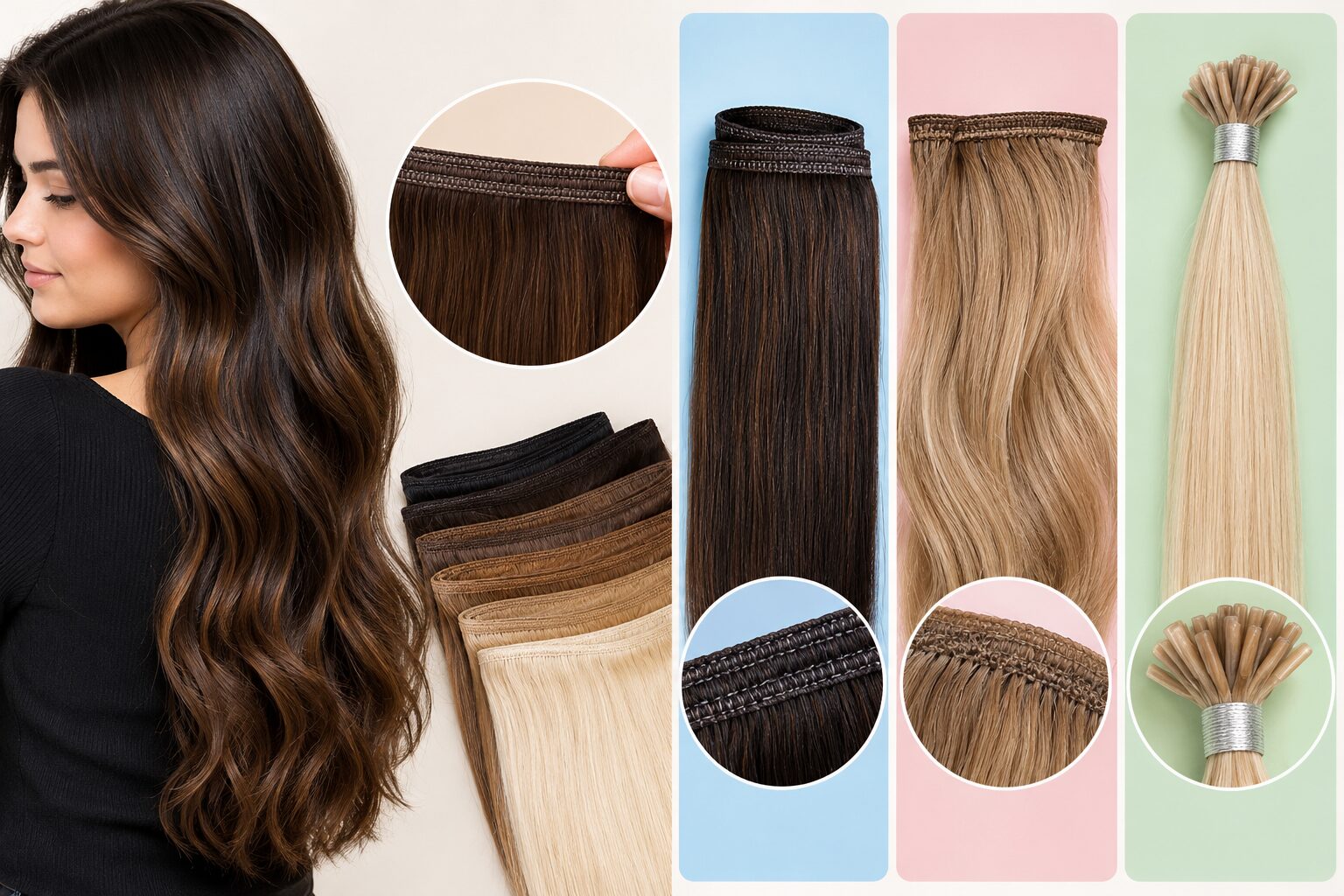
Weft hair extensions are strips of hair, sewn or tied together along one edge, that attach to natural hair to add length or volume. These weft hair extensions come in various types.
Understanding the types of weft hair extensions available matters because each construction method affects comfort, thickness, and how natural the final result looks. The two main weft types are machine-made and hand-tied, and both differ from I-Tip extensions, a separate method some clients compare wefts against.
This guide breaks down how each option works so you can talk through choices with more confidence at your next consultation.
What Are Weft Hair Extensions?
Thinking about getting weft extensions but confused about what they actually are? A weft is a row of hair strands connected along a single seam, creating a strip that can be sewn, taped, clipped, or otherwise secured to natural hair.
Instead of attaching hair strand by strand, a stylist works with a continuous section, which is part of why wefts are used for both quick installs and longer-lasting salon applications, like our weft extensions in Wynwood.
The two primary types of weft hair extensions are machine-made and hand-tied. Both start from real, high-quality human hair, but the way the strands are joined at the seam is what separates one from the other, and that seam is what a stylist has to work with when blending extensions into natural hair.
Machine-Made Wefts: The Standard Weft Type
Machine wefts are setting new standards in the hair extension market. Machine wefts are produced by sewing hair onto a track using an industrial machine. This creates a thicker, sturdier seam that holds a large volume of hair securely, which is why machine wefts are a common starting point when comparing weft hair extension types.
As the seam is larger, machine wefts tend to lay higher off the scalp than hand-tied wefts. A good stylist will section and place the hair so it doesn’t look that way, but it is a definite difference to keep in mind when choosing between the two styles.
Machine wefts also tend to be less expensive to produce, since the sewing process is faster and more standardized than tying strands by hand.
Hand-Tied Wefts: A Thinner, Flatter Weft Type
Hand-tied wefts are constructed by hand, with individual sections of hair tied onto a thin track rather than machine-stitched. This produces a flatter, lower-profile seam that lies closer to the scalp.
Clients who choose hand-tied extensions often ask about the cost because the hand-tying process is more labor-intensive and therefore higher priced. Many clients are willing to make this sacrifice because they want a less noticeable knot and a more subtle look.
As the seam is finer, hand-tied wefts also tend to be easier to conceal, especially for clients with fine or thin natural hair who want less bulk at the root.
Where I-Tip Extensions Fit In
I-Tip extensions are not a weft. They’re individual strands of hair, each fitted with a small keratin or silicone tip, attached one at a time using tiny beads or rings rather than sewn onto a track.
The comparison to wefts comes up often because I-Tips offers an alternative for clients who want more customized, strand-by-strand placement instead of a continuous row of hair. A full breakdown of how I-Tips stack up against another popular strand method.
The practical difference: wefts spread the weight over a larger section of hair at fewer attachment points, while I-Tips spread it over many more discrete points. It’s hard to say which is superior: it depends on your client’s natural hair density, how much freedom of movement they want, and how much time they want to spend getting their hair done.
Choosing Between Weft Types and Other Extension Methods
Deciding between machine wefts, hand-tied wefts, or a strand-based method like I-Tips usually comes down to three things: hair density, budget, and how much upkeep a client is willing to commit to.
- Hair Density: Finer hair often benefits from hand-tied wefts or I-Tips, since both distribute weight more gently than a thicker machine weft.
- Budget: Machine wefts are generally the more affordable entry point among the types of weft hair extensions, while hand-tied and strand methods cost more due to labor.
- Maintenance: Wefts typically need to be moved up as natural hair grows, while I-Tips are repositioned individually during maintenance visits.
Clients with thicker hair considering wefted options may also explore tape-in extensions, another wefted method that uses adhesive strips instead of sewing.
How Extension King Approaches Extensions
Extension King is known for its signature cold pressed, strand-by-strand method, which uses no heat, glue, or chemicals. Though it isn’t a true weft, it shares goals with both hand-tied wefts and I-Tips: a low-profile, natural-looking option that is less damaging to your natural hair.
Understanding the types of weft hair extensions before your appointment makes it easier to have a productive conversation with your stylist about what will actually work for your hair. If you’re weighing wefted options, a free VIP consultation is the most reliable way to get a recommendation suited to your hair type and goals.
Frequently Asked Questions
What is the main difference between machine and hand-tied wefts?
Machine wefts are sewn by machine and are slightly thick at the seam, while hand-tied wefts are tied by hand, leaving a very subtle flat area that is much easier to hide.
Are I-Tip extensions a type of weft?
No. I-Tips are individual strand extensions attached with beads or rings, not a sewn or tied strip of hair like a weft.
Which weft type lasts longer?
Both machine- and hand-tied wefts can last several months with proper care and regular maintenance appointments, though hand-tied wefts are often reused more easily because of their construction.
Do wefts damage natural hair?
When a trained stylist installs and maintains them properly, wefts distribute weight evenly and avoid concentrated stress on any one section of hair.
