
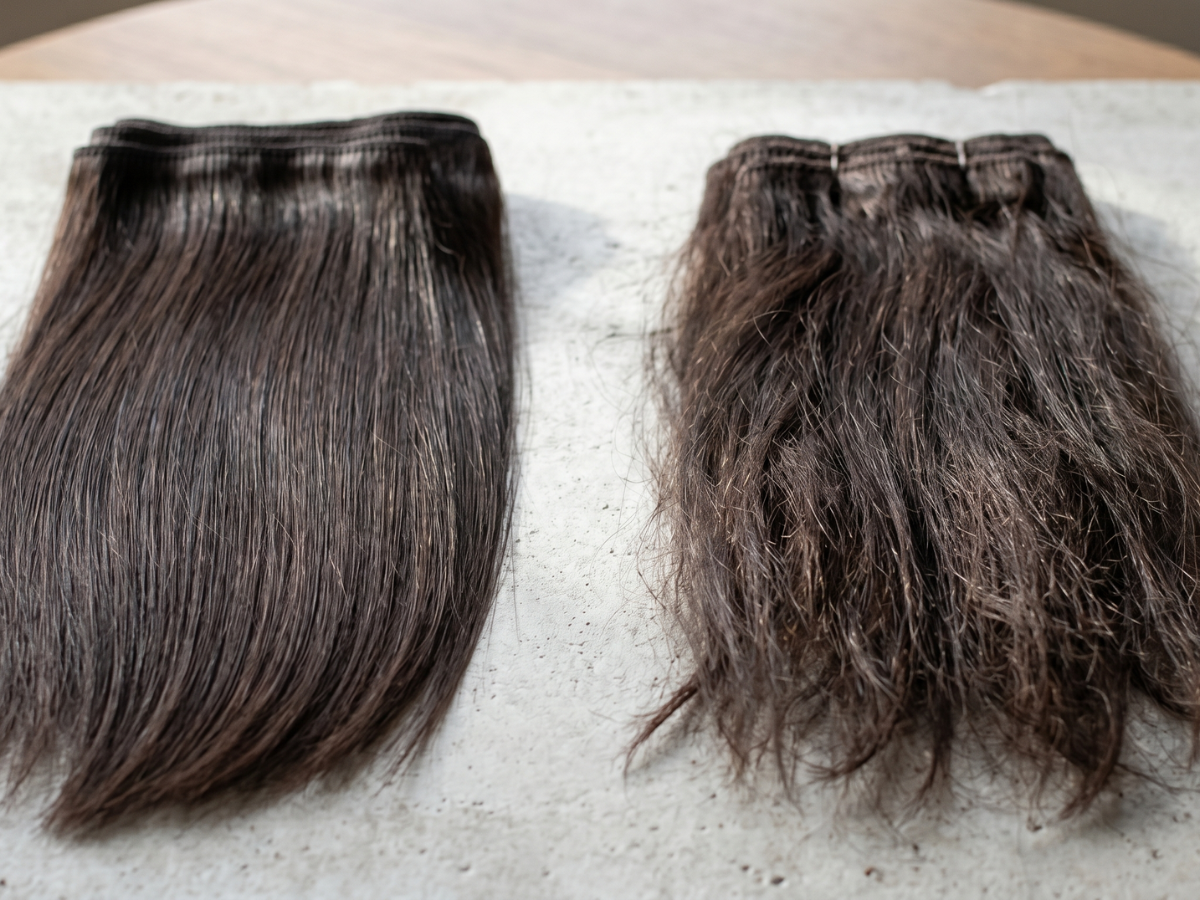
Choosing between premium cuticle-aligned extensions and lower-grade alternatives is one of the most important decisions you can make for your beauty routine and long-term hair health. When you invest in hair extensions, you are not simply adding length or volume. You are also making a decision that can affect the condition of your natural strands and overall scalp wellness. Selecting poor-quality extensions may create ongoing frustration and even contribute to hair loss and permanent hair breakage. In this guide, we will explain how the structure and quality of extensions directly influence the durability, appearance, and health of your hairstyle.
What Is Remy Hair?
Within the professional beauty industry, Remy hair is considered the highest standard because of the careful collection process used to preserve the natural structure of each strand. During harvesting, every fiber is maintained in the same direction from root to tip, ensuring the outer cuticle layers stay properly aligned. This meticulous technique helps create smoother, longer-lasting extensions that blend naturally and resist tangling over time.
The cuticle is the outermost protective layer of the hair. It consists of overlapping scales that resemble shingles on a roof. When these scales all point in the same downward direction, the hair remains smooth, shiny, and soft. This alignment is vital for maintaining healthy hair with extensions because it eliminates the friction that causes severe tangling. Because the cuticles are intact, the hair retains moisture better and reflects light more naturally, giving you that sought-after salon glow.

What Is Non-Remy Hair?
Non-Remy hair comes from mixed sources like floor sweepings, causing disorganized cuticle directions. To prevent instant matting, manufacturers use harsh chemicals to strip the cuticle layer entirely. They then apply a silicone coating for temporary shine.

Once you wash these Hair Extensions, the silicone vanishes. This exposes a damaged core, leading to severe bird-nesting and Hair Breakage. This tangling puts immense stress on your Natural Hair and can compromise Scalp Health. For a long-term solution, choose safe hair extension methods to avoid Hair Loss and maintain healthy hair with extensions.
Remy vs Non-Remy Hair: Key Differences
| Feature | Remy Hair | Non-Remy Hair |
| Cuticle Status | Intact and Aligned | Stripped or Misaligned |
| Longevity | 6 to 12 months | 4 to 6 weeks |
| Price | Premium Investment | Budget-Friendly |
| Maintenance | Low / Manageable | High / Difficult |
| Styling | Can be heat styled | Heat causes damage |
| Feel | Soft and Silky | Coarse after washing |
Pros and Cons of Remy Hair Extensions
The Pros:
The primary benefit of Remy hair is its ability to blend seamlessly with your own strands. Because it behaves like human hair, it moves naturally when you walk. It is the foundation for safe hair extension methods because the lack of tangling means there is no unnecessary weight pulling on your follicles. It is durable enough to survive daily brushing, washing, and heat styling without losing its luster.
The Cons:
The main drawback is the upfront cost. Because the collection process is labor-intensive, the price is higher. It also requires the use of professional-grade, sulfate-free products to keep the cuticles hydrated. However, most users find that the long lifespan makes it more affordable in the long run than constantly replacing cheaper hair.
Pros and Cons of Non-Remy Hair Extensions
The Pros:
Non-Remy hair is very accessible and easy on the wallet. It is a popular choice for budget-conscious shoppers who only need hair for short-term use. If you are doing a photoshoot or a one-night event and do not plan to wear the hair again, this might be a viable option.
The Cons:
The risks often outweigh the savings. The biggest issue is hair breakage. As the hair mats, it creates heavy knots that pull on your own hair. This tension can lead to traction alopecia, which is a form of hair loss caused by constant pulling. The hair also loses its beauty very quickly, often looking dry and straw-like after just two or three washes.
How to Choose Between Remy and Non-Remy Hair
When making your choice, consider your lifestyle and styling habits. If you are someone who works out, swims, or styles your hair every morning, Remy is the only logical choice. It can handle the moisture and heat of a busy lifestyle in a humid climate like Miami.
If you prefer clip-in extensions for occasional use, you might find more flexibility. However, for semi-permanent methods like tape-in extensions or keratin bonds, quality is non-negotiable. Our expert advice on hair extensions is to always prioritize the long-term health of your hair over a cheap price tag. Investing in quality prevents the need for expensive repair treatments for your natural scalp later on.
How to Spot Genuine Remy Hair
In a market flooded with products, it is easy to get confused. Here are practical ways to ensure you are getting the real deal:
- The Texture Test: Run your fingers up the hair shaft toward the roots. If it feels slightly rougher going up than going down, the cuticles are likely intact. If it feels identical in both directions, it has likely been stripped.
- The Shine Check: Genuine Remy hair has a subtle, healthy glow. Non-Remy hair often has an oily, plastic-like shine from the heavy silicone coating.
- The Burn Test: If you take a few strands and burn them, real human hair will turn to ash and smell like burning feathers. Synthetic or heavily treated hair will melt and smell like plastic.
- Trust Your Stylist: Always purchase from reputable locations like Extension King Hair Salon & Shop. We vet every bundle to ensure our Miami clients receive only the best.
Care Tips for Hair Extensions
To keep your extensions looking like they just came out of the salon, follow these professional hair extension care tips. First, never sleep on wet hair. Moisture weakens the bonds and causes the hair to swell, leading to mats. Second, use maintenance tips for hair extensions such as brushing three times a day with a special extension brush. This prevents tangles from forming at the attachment points.
Many people believe that hair extensions damage natural hair, but this is a common myth. Damage is almost always the result of poor-quality hair or neglect. By using high-quality Remy K-tips and following a strict care routine, you can actually protect your natural hair. It acts as a barrier against environmental damage and reduces the amount of heat you apply directly to your own strands.
FAQs
Is Remy hair worth the price?
Absolutely. While the initial cost is higher, you can wear Remy hair for up to a year. Non-Remy hair usually needs to be thrown away after a month. You end up spending less money per month with Remy hair.
Can non-Remy hair look natural?
It can look natural for the first day. However, once you sweat or wash it, the lack of a cuticle makes the hair swell and frizz, making it look very different from your own hair.
How long do hair extensions last?
High-quality Remy extensions typically last 6 to 12 months with proper maintenance. Non-Remy extensions usually only last 4 to 6 weeks before they become too tangled to wear.
Which is better for beginners?
Remy hair is much better for beginners. It is far more forgiving and easier to manage. Beginners often struggle with the extreme tangling that comes with cheaper hair grades.
Conclusion
The debate of Remy vs. non-Remy hair comes down to one thing: the health and beauty of your hair. While the price of non-remy hair is tempting, the hidden costs of tangling, matting, and potential hair loss are too high. By choosing Remy hair, you ensure a flawless blend and a stress-free experience.
If you are in the Miami area and want a look that lasts, come see the experts. We are dedicated to providing the highest quality hair and professional installation services. Protect your natural beauty and elevate your style with the best hair on the market.
Ready for the hair of your dreams? Visit Extension King Hair Salon & Shop today to explore our premium collections. Book your consultation now and let us help you find the perfect match for your Remy vs. non-Remy hair needs!
